- *** Forbidden. Fraud prevention. Sender blacklisted. Anti-Spam by CleanTalk. ***
$8.50
Spring Shipping ONLY !!
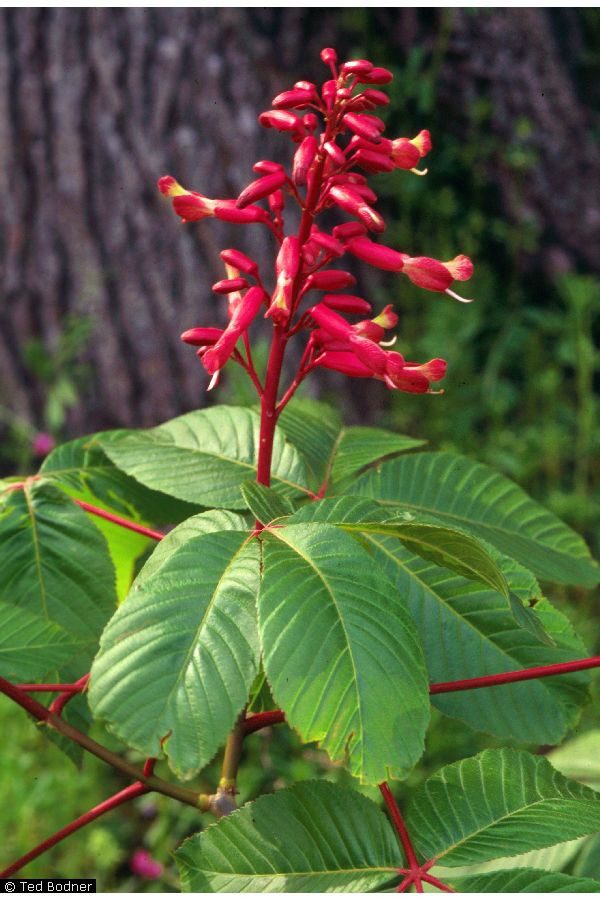
Aesculus pavia Red Buckeye
Aesculus pavia L.
Scarlet Buckeye , Red Buckeye, Firecracker Plant
An order minimum of 5 of this size/species is required.
Native Red Buckeye trees for sale Wholesale Pricing is based on quantity.
5 or more $8.50 each
25 or more $4.50 each
5o or more $3.00 each
For Shipping, Install and additional info please see “About Bare Root“.
Native bare Root Trees are cut and shipped while dormant, late November to early spring.
The NOT Fine Print
Unless otherwise indicated, there is a minimum order total of $150.00.
before tax (VA residents only) and shipping.
Before you order:
Please be assured that our goal as native plant growers with over 45 years of experience, is to support the intention and needs of our customers. Whether you are an industry professional or home conservationist, or if you just like GREAT plants! We want your return business!
We are always available to answer questions about a plant's cultural needs or to assist our customers with any questions to make working with Mid Atlantic Natives a superior experience. To do this, we cannot stress enough the importance of selecting the right species for your application and environment. Each plant species has detailed information for its suitable, preferred environment (Sun, wet, dry, acidic, etc.) We provide this information so you can make the best selections and have the best results. (as in, I planted a water plant in a desert dune and don't know why it died!!)
Before selecting plants, please ask yourself:
Are the site conditions correct for the species you select? Do you know how to correctly plant? Are you able to provide the aftercare needed?
It is important to us that you are successful with your investment. We would rather not sell our plants then have a dissatisfied, unprepared customer or, equally as upsetting to us, any plant mortality.
Because we have no control over how plants are handled after they are shipped, or of any element of a planting project from design to installation, we cannot offer any guarantees of plant survival. Please make sure you select plant material suitable for your project’s conditions and environment. All Sales Are Final
We are careful to keep varieties true to name, but mistakes sometimes happen. It is mutually agreed that our liability for any errors is confined to replacement with correct species or, if not available, credit of the purchase price.
In the event of an incorrect count we will send the missing items. There is no opportunity for a credit unless those items are not available. The credit will be for the missing amount only.
Damage
Because of the type of packaging and custom-designed box style we use, shipping issues are rare. If there is a problem with your purchased items, it must be reported to us within 72 hours of receipt. Photos of the shipping materials and plants will be requested.
Claims resulting from carrier issues will result in your order being replaced or refunded once the claim is settled with the carrier.
Please report any other problems immediately, and we will make every effort to resolve any issues to your satisfaction. Under no circumstances will the claim amount exceed the order amount.
Inspections
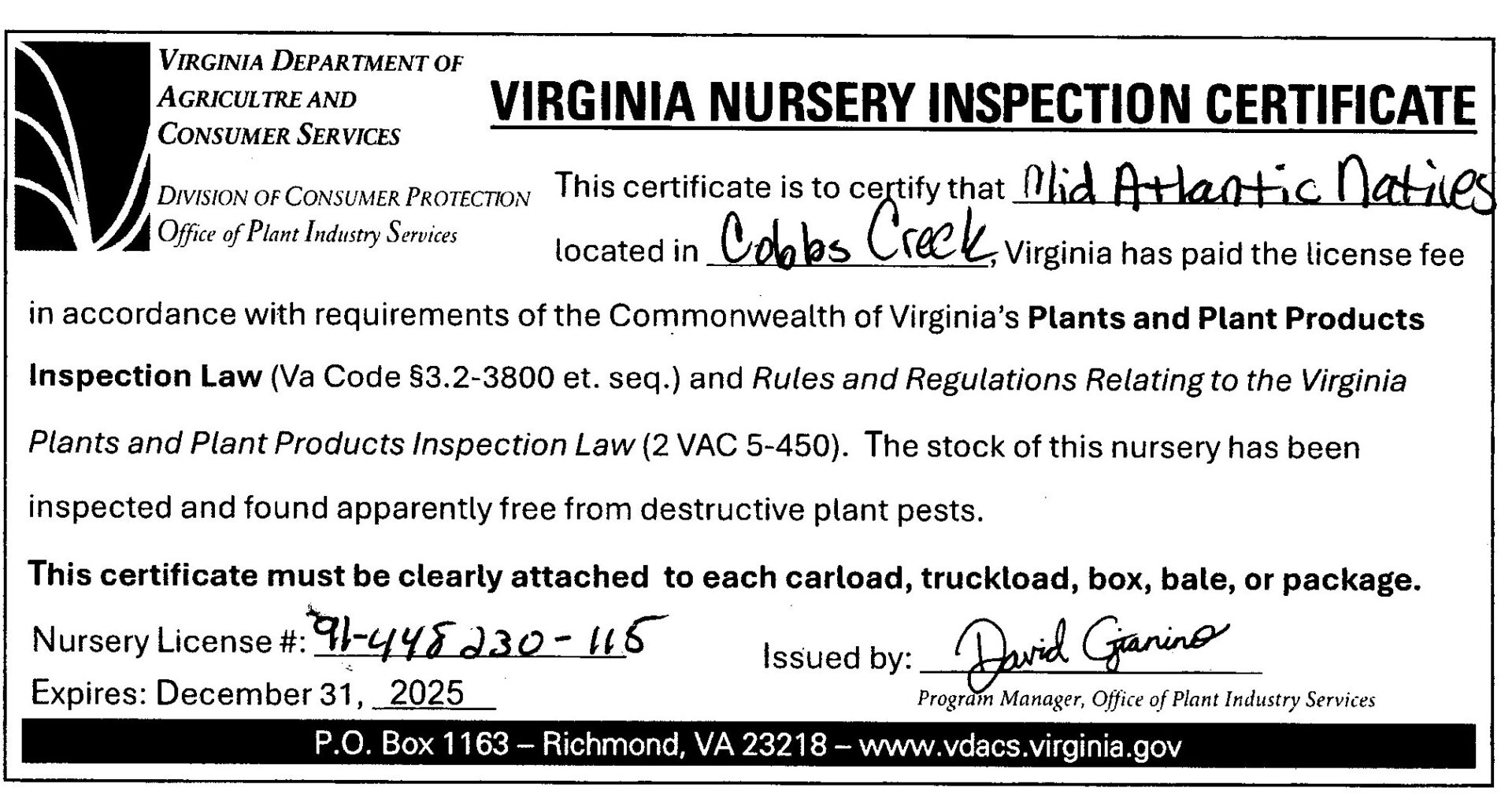
Our nursery stock has been inspected by the Virginia Department of Agriculture. Your order will be shipped with a VA Nursery Inspection certificate. A copy of our current nursery certificate is here.
Need more "Not So Fine Print"? We hope you do! For fun, and because you have to agree to it, please read our full "Terms and Conditions".
Description
Aesculus pavia, Red Buckeye
Aesculus pavia L.
Scarlet Buckeye , Red Buckeye, Firecracker Plant
Plant Characteristics
Duration: Perennial
Habit: Shrub , Tree
Root Type: Tap
Leaf Retention: Deciduous
Leaf Arrangement: Opposite
Leaf Complexity: Palmate
Leaf Shape: Elliptic
Leaf Venation: Pinnate
Leaf Pubescence: Glabrous , Tomentose
Leaf Margin: Crenate , Serrate
Leaf Apex: Acuminate
Breeding System: Flowers Unisexual , Monoecious
Inflorescence: Thyrse
Fruit Type: Capsule
Size Notes: 10-40 feet, Texas specimens usually on the short end of that range, with those in central Texas commonly no more than 15 feet.
Leaf: Opposite, palmately compound, with 5, rarely 7, leaflets; leaflets elliptic to ovate, pointed at the tip, tapering to the base, toothed, green and smooth on the upper surface, paler and finely hairy on the lower surface, up to 6 inches long, up to 3 inches wide.
Flower: Numerous, red, in large, loosely-flowered clusters nearly 1 foot long.
Fruit: Capsules spherical, up to 2 inches across, light brown, not prickly, containing 1 or 2 light reddish brown seeds.
Size Class: 12-36 ft.
Bloom Information
Bloom Color: Red , Yellow
Bloom Time: Mar , Apr , May
Bloom Notes: Red-flowered plants are variety pavia, found from North Carolina, Florida, and Illinois to the eastern part of the Edwards Plateau in central Texas. Yellow-flowered plants are variety flavescens, found in the western Edwards Plateau of central Texas. Natural hybridization produces two-toned flowers where their ranges meet.
Aesculus pavia Red Buckeye
Distribution
USA: AL , AR , FL , GA , IL , KY , LA , MO , MS , NC , OK , SC , TN , TX , VA , WV
Native Distribution: Southeastern North America. North Carolina south to northern Florida, west to central Texas, and north to southern Illinois; to 1500 ft (457 m).
Native Habitat: Common in woods, along streams, in thickets, and on rocky hills.
Aesculus pavia Red Buckeye
Growing Conditions
Water Use: Medium , High
Light Requirement: Part Shade
Soil Moisture: Moist
Soil pH: Acidic (pH<6.8) , Circumneutral (pH 6.8-7.2)
CaCO3 Tolerance: Medium
Drought Tolerance: Medium
Soil Description: Deep, well-drained sand, loam, clay, limestone. Variety pavia prefers more acidic, often sandy soils than variety flavescens, which is found in rocky limestone soils within its range.
Conditions Comments: Do not over-water. Too much water can lead to leaf spot diseases. Does best if protected from afternoon sun.
Benefit
Use Ornamental: Planted as a handsome ornamental for the showy red flowers, suggesting firecrackers.
Use Wildlife: Flowers attract hummingbirds and bees. Nuts consumed by squirrels.
Use Medicinal: Pioneers made home remedies from the bitter bark.
Use Other: American Indians threw powdered seeds and crushed branches of this and other buckeyes into pools of water to stupefy fish. The fish then rose to the surface and were easily caught. Pioneers used the gummy roots as a soap substitute and the wood to produce a black dye.
Warning: Seeds and young shoots are poisonous to humans if eaten. Sensitivity to a toxin varies with a person’s age, weight, physical condition, and individual susceptibility. Children are most vulnerable because of their curiosity and small size. Toxicity can vary in a plant according to season, the plant’s different parts, and its stage of growth; and plants can absorb toxic substances, such as herbicides, pesticides, and pollutants from the water, air, and soil.
Conspicuous Flowers: yes
Interesting Foliage: yes
Attracts: Hummingbirds
Deer Resistant: Moderate
Hippocastanaceae (Horse-Chestnut Family)
Synonym(s):
USDA Symbol: aepa
USDA Native Status: L48 (N), CAN (I)
Native from North Carolina south to Florida, west to central Texas, and as far north as Illinois, Aesculus pavia is a handsome shrub or small tree with showy thyrses (often called panicles) of deep red or yellow, campanulate flowers in early spring. The flower clusters are 6-10 inches long, and the individual flowers are 1-1 1/2 inches long. The stamens are rarely much longer than the top petals, usually shorter. The leaves are made up of 5 leaflets joined at a central point on a stem as long as the leaf. They are fine-toothed, glossy dark green above and whitish beneath. The leaves usually drop by the end of summer.
Two varieties are recognized. Aesculus pavia var. pavia has red flowers and is found throughout the range of the species except the western Edwards Plateau in central Texas, where variety flavescens occurs. Variety flavescens has pale to vivid, yellow flowers and is found naturally in only a few counties in central Texas. Where the ranges of the two varieties overlap, hybridization occurs, producing flowers in various combinations of yellow and red.
It is normal for this plant to drop its leaves by the end of summer, so try to place it where it will be highly visible in the early spring but less noticeable after it drops its leaves. The seeds and young shoots are poisonous if ingested, and indigenous people crushed these parts and put them in water to stupefy fish for easier capture. Soap may be obtained from the roots and a black dye from the wood. The species name, pavia, is in honor of Peter Paaw, a 16th century Dutch botanist.
This species flowers in April to May depending on the part of the country in which it is found. The tree is sometimes planted as an ornamental. Some wildlife species eat the seeds, but raw they are poisonous to humans and most domestic livestock. A variety of native bees visits the flowers, but the pollen and nectar are poisonous to honeybees. In some recent taxonomic treatments, the Hippocastenaceae is put into the family Sapindaceae. However, generally susceptible species are inherently aware and avoid this species.
More Info: https://plants.usda.gov/home/plantProfile?symbol=aepa
Aesculus pavia L.
Scarlet Buckeye , Red Buckeye, Firecracker Plant
Related products
-

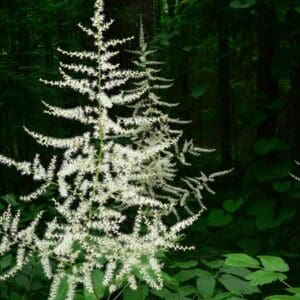
Astilbe biternata, Appalachian false goat’s beard, Wholesale Native Bare Root Perennials0
$8.00 Add to cart -
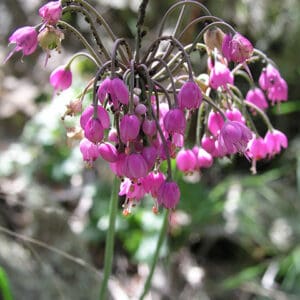
Allium cernuum, Nodding Onion, Wholesale Native Bare Root Perennial
$8.00 Add to cart -
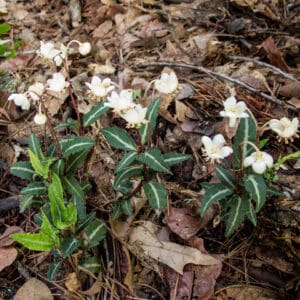
Chimaphila maculata, Spotted Wintergreen, Pipsissewa, Wholesale Native Bare Root Perennials
$2.35 Add to cart -
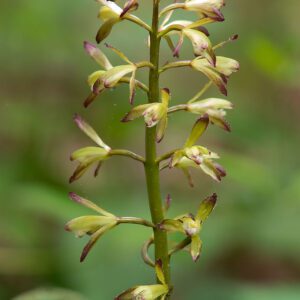
Aplectrum hyemale, Adam and Eve, Bare Root Woodland Perennial, Orchid
$8.00 Add to cart