$8.00
Viola pedata, Birds Foot Violet, Wholesale Native Bare Root Perennials
(requires a minimum purchase of 5 plants, must be purchased in groups of 5)
Wholesale pricing is based on quantity.
5 or more $8.00 each
25 or more $4.00 each
50 or more $2.25 each
300 or more $2.00 each
For Shipping, Install and additional info please see “About Bare Root“.
See all available Native Bare Root Perennials
Check the native status of this species for your area via the USDA Plants Database here.
Order Minimum
There is a minimum order total of $150.00.
before tax (VA residents only) and shipping.
There are NO EXCEPTIONS.
Description
Viola pedata L.
Birdfoot Violet, Bird’s-foot Violet, Bird-foot Violet
Violaceae (Violet Family)
Synonym(s): Viola pedata var. concolor, Viola pedata var. lineariloba, Viola pedata var. ranunculifolia
USDA Symbol: vipe
USDA Native Status: L48 (N), CAN (N)
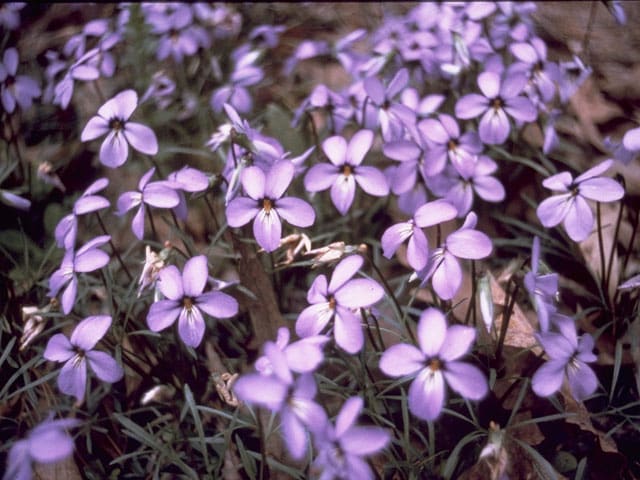
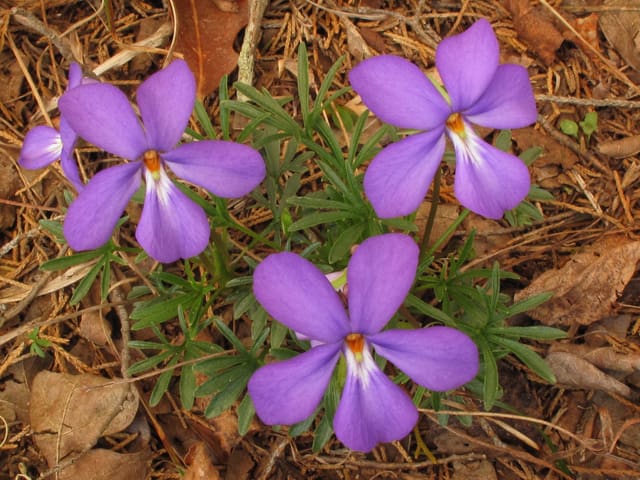
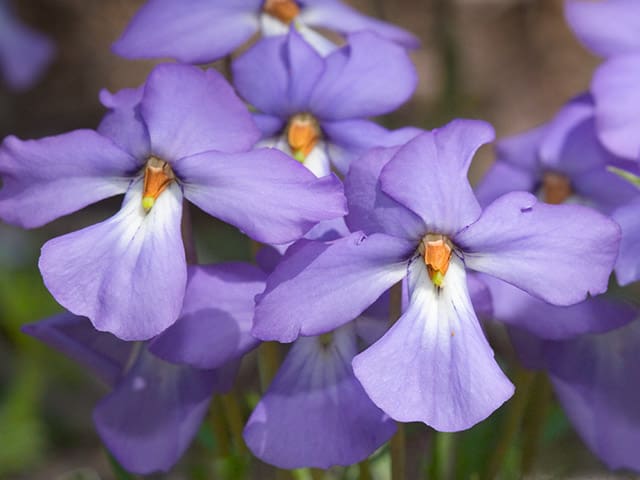
Bird-foot Violet is a low, clumped perennial, 4-10+ in. high, with large, almost pansy-sized flowers. The leaves, almost round in outline, are 3/4-2 inches long, deeply cut into 3-5 segments, and these again narrowly lobed. The leaf stem is 4-6 inches long. Flowers are pale to dark purple, broad, flat, 1-1 1/2 inches across. They have 5 petals, the 2 upper ones smaller than the lower 3 and deep violet. The lowest petal has the dark streakings which are common to most violets. There are 5 stamens with brilliant orange anthers.
A most beautiful Violet of dry, upland sites. Its showy, light violet-blue flowers, distinctive “bird’s-foot”-shaped leaves make it easy to identify. It is pollinated by bees and butterflies. The bicolored form of this species, with its 2 upper petals a deep violet and the lower 3 a lilac shade, has been considered the most beautiful Violet in the world. This violet does not reproduce vegetatively like most other violets. Reproduction is by seed only.
Plant Characteristics
Duration: Perennial
Habit: Herb
Leaf Complexity: Simple
Fruit Type: Capsule , Caryopsis
Size Notes: Up to about 1 foot tall.
Fruit: Green
Bloom Information
Bloom Color: Blue , Purple
Bloom Time: Mar , Apr , May , Jun
Distribution
USA: AL , AR , CT , DC , DE , GA , IA , IL , IN , KS , KY , LA , MA , MD , ME , MI , MN , MO , MS , NC , NE , NH , NJ , NY , OH , OK , PA , RI , SC , TN , TX , VA , WI , WV
Canada: NB , ON
Native Distribution: MA to MN, s. to GA & e. TX
Native Habitat: Rocky, open woods; sandy prairies & pinelands
Growing Conditions
Light Requirement: Part Shade , Shade
Soil Moisture: Dry
Soil pH: Acidic (pH<6.8)
Soil Description: Dry, rocky, or sandy soils.
Conditions Comments: This plant is particularly susceptible to crown rot if drainage is not excellent.
Benefit
Conspicuous Flowers: yes
Attracts: Birds , Butterflies
Butterflies and Moths of North America (BAMONA)
Regal Fritillary
(Speyeria idalia)
Larval Host
Learn more at BAMONA
For Shipping, Install and additional info please see “About Bare Root“.
Native bare root perennials are dug and shipped while dormant, mid October to early spring.
See all available Native Bare Root Perennials
Check the native status of this species for your area via the USDA Plants Database here.
Related products
-

Aplectrum hyemale, Adam and Eve, Bare Root Woodland Perennial, Orchid
$8.00 Add to cart -
Trillium sessile, Toadshade, Wholesale Native Bare Root Perennial
$8.00 Add to cart -
Hydrastis canadensis, Goldenseal, Wholesale Native Bare Root Plant
$8.00 Add to cart -
Phlox diviricata, Wild Blue Woodland Phlox, Wholesale Native Bare Root Perennial
$8.00 Add to cart