- *** Forbidden. Fraud prevention. You sent forms too often. Please wait a few minutes. Your IP belongs to a high spam risk network. Please, try again without VPN. Anti-Spam by CleanTalk. ***
$8.00
Asclepias tuberosa, Butterfly Weed, Organically Grown Native Perennial Plugs, Native Wildflowers, Native Pollinator Support Plants
There is a required minimum purchase of 5 individual plant plugs for this species. There are 50 individual plant plugs of this species in a tray.
5 or more $8.00 each
25 or more $3.75 each
50 or more $1.85 each
300 or more $1.80 each
1,000 or more call
For Shipping, Planting and additional FAQ’s please see “About our organically grown native plug trays “.
See all available Native Perennial Grasses & Organically Grown Plug Trays
The NOT Fine Print
Unless otherwise indicated, there is a minimum order total of $150.00.
before tax (VA residents only) and shipping.
Before you order:
Please be assured that our goal as native plant growers with over 45 years of experience, is to support the intention and needs of our customers. Whether you are an industry professional or home conservationist, or if you just like GREAT plants! We want your return business!
We are always available to answer questions about a plant's cultural needs or to assist our customers with any questions to make working with Mid Atlantic Natives a superior experience. To do this, we cannot stress enough the importance of selecting the right species for your application and environment. Each plant species has detailed information for its suitable, preferred environment (Sun, wet, dry, acidic, etc.) We provide this information so you can make the best selections and have the best results. (as in, I planted a water plant in a desert dune and don't know why it died!!)
Before selecting plants, please ask yourself:
Are the site conditions correct for the species you select? Do you know how to correctly plant? Are you able to provide the aftercare needed?
It is important to us that you are successful with your investment. We would rather not sell our plants then have a dissatisfied, unprepared customer or, equally as upsetting to us, any plant mortality.
Because we have no control over how plants are handled after they are shipped, or of any element of a planting project from design to installation, we cannot offer any guarantees of plant survival. Please make sure you select plant material suitable for your project’s conditions and environment. All Sales Are Final
We are careful to keep varieties true to name, but mistakes sometimes happen. It is mutually agreed that our liability for any errors is confined to replacement with correct species or, if not available, credit of the purchase price.
In the event of an incorrect count we will send the missing items. There is no opportunity for a credit unless those items are not available. The credit will be for the missing amount only.
Damage
Because of the type of packaging and custom-designed box style we use, shipping issues are rare. If there is a problem with your purchased items, it must be reported to us within 72 hours of receipt. Photos of the shipping materials and plants will be requested.
Claims resulting from carrier issues will result in your order being replaced or refunded once the claim is settled with the carrier.
Please report any other problems immediately, and we will make every effort to resolve any issues to your satisfaction. Under no circumstances will the claim amount exceed the order amount.
Inspections
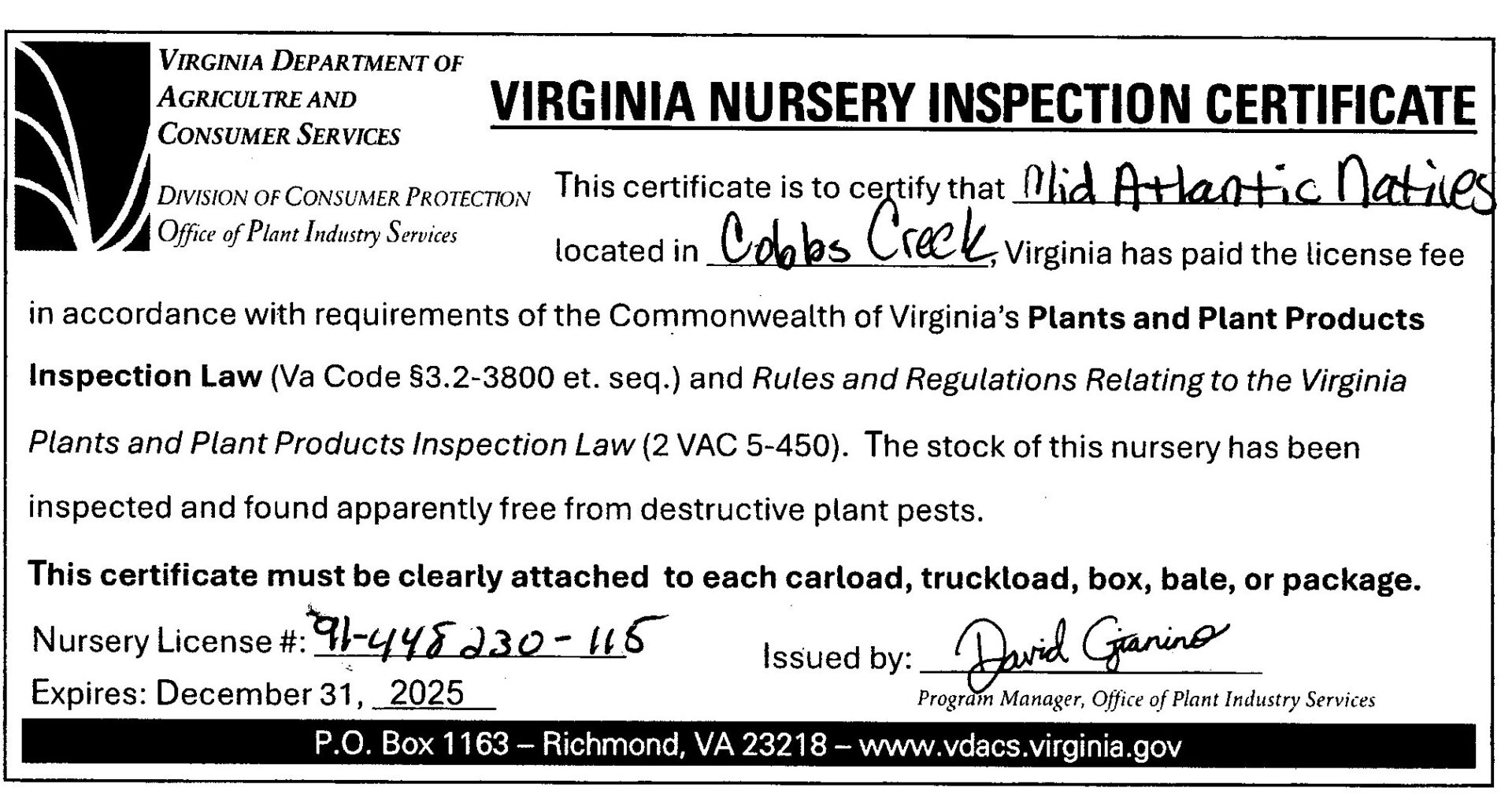
Our nursery stock has been inspected by the Virginia Department of Agriculture. Your order will be shipped with a VA Nursery Inspection certificate. A copy of our current nursery certificate is here.
Need more "Not So Fine Print"? We hope you do! For fun, and because you have to agree to it, please read our full "Terms and Conditions".
Description
Asclepias tuberosa, Butterfly Weed, Organically Grown Native Perennial Plugs, Native Wildflowers, Native Pollinator Support Plants
Attractive Flowers
Beneficial to Insects:
host for monarch butterflies Butterflies:
Erosion Control:
FACU – Usually occur in non-wetlands, but may occur in wetlands:
Flood Tolerant:
Full – Part Sun (6+ hours of sun):
Herbaceous plant:
High Wildlife Value:
Hummingbirds:
Loamy Soil- mostly silt, sand, some clay:
Moist Soil:
Native to Coastal Regions:
Native To Mountain Regions:
Native to Piedmont Regions:
Perennial:
Pollinator support:
Small Mammals:
UPL- Almost never occur in wetlands:
Wildflower:
Full Sun:
Botanic Native Name (s): Asclepias tuberosa
Common Native Name(s): Butterfly milkweed
Mature height :2-3′
Mature spread:3-4ft
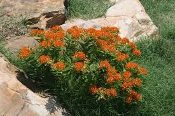
Flower Color: ORANGE
Bloom Time: May-July
Fruit: Pod
Sun Exposure: Full Sun Part Sun
Soil moisture: Average Moist
Soil Ph:5-8
Soil Type: Clay Soil- High clay content, fine texture
Loamy Soil- mostly silt, sand, some clay
Asclepias tuberosa Native Habitat: Roadsides along ditches, streambanks, meadows, prairies
Notes: Asclepias tuberosa is a Major food and larva source for monarch butteflies, can tolerate drought, interesting seed pod
Fragrant Erosion Control Flood Tolerant Drought tolerant Deer Resistant
High Wildlife Value: Beneficial Insects Butterflies Hummingbirds
Native to Coastal Regions
Native To Mountain Regions
Native to Piedmont Regions
Native Perennial/Wildflower
Asclepias tuberosa, the butterfly weed, is a species of milkweed native to eastern and southwestern North America. It is commonly known as butterfly weed because of the butterflies that are attracted to the plant by its color and its copious production of nectar.
Butterfly Milkweed (Asclepias tuberosa L.)
By Larry Stritch USFS
Butterfly weed is a member of the milkweed family (Asclepiadaceae). The genus name Asclepias is named after the Greek god of medicine Asklepios. The species name tuberose refers to the tuberous (knobby and with swellings) roots.
Butterfly weed grows commonly in dry open habitats and is very common in the prairies and grasslands of the Midwest and Great Plains. This beautiful native wildflower is found from Maine to South Dakota to the desert southwest to Florida.
Native Americans harvested fibers from the dried stems that were made into ropes and used in weaving cloth. Many tribes used various parts of the butterfly weed as food. In colonial America, dried leaves of butterfly weed and skunk cabbage were made into a tea to treat chest inflammations thus giving butterfly weed an alternative name: pleurisy root. Pleurisy root was listed in the American Pharmacopoeia and the National Formulary until 1936.
Butterfly weed is a coarse perennial forb consisting of many stems. The stems are straight and very hairy. The leaves are alternate and simple. Unlike other species of milkweed butterfly weed does not contain the characteristic thick milky sap but instead has a watery translucent sap. The inflorescence is slightly rounded to flat and made up many individual flowers. The flower consists of five petals pointing down and topped by a crown of five erect hoods. The fruit is a pod containing numerous brown seed each with a tuft of silky white hairs. Many a child and adult have gleefully pulled the seeds from a ripened, opened pod and let them float gracefully on a gentle breeze.
Butterfly weed is commonly planted in formal garden borders and in meadow and prairie gardens. This wildflower does not transplant well as it has a deep woody taproot. It is easily propagated from seed. Collect the seed from the pods has they just begin to open. Butterfly weed seed need a three-month cold stratification. Therefore, it is best to plant the seed in autumn and they will easily germinate the following spring.
Benefit
Use Ornamental: Butterfly weed makes a delightful cut flower. Strong color, Blooms ornamental, Showy, Long-living, Perennial garden.
Use Medicinal: Its tough root was chewed by First Nations People as a cure for pleurisy and other pulmonary ailments explaining its other common name, pleurisy root. (Niering) Fresh root chewed for bronchitis and other respiratory complaints. Tea of root for diarrhea.
Use Other: This showy plant is frequently grown from seed in home gardens.
Warning: POISONOUS PARTS: Roots, plant sap from all parts. Not edible. Toxic only if eaten in large quantities. Symptoms include vomiting, stupor, weakness, spasms. Toxic Principle: Resinoid, cardiac glycoside. (Poisonous Plants of N.C.)
Conspicuous Flowers: yes
Attracts: Butterflies , Hummingbirds
Larval Host: Grey Hairstreak, Monarch, Queens
Nectar Source: yes
Deer Resistant: High
Value to Beneficial Insects
Special Value to Native Bees
Special Value to Bumble Bees
Special Value to Honey Bees
Supports Conservation Biological Control
Asclepias tuberosa, Butterfly Weed, Organically Grown Native Perennial Plugs, Native Wildflowers, Native Pollinator Support Plants
For Shipping, Planting and additional FAQ’s please see “About our organically grown native plug trays “.
See all available Native Perennial Grasses & Organically Grown Plug Trays
Related products
-

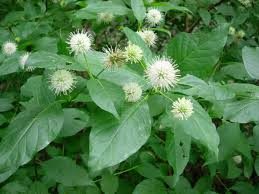
Cephalanthus occidentalis Buttonbush 18″ FRESHLY cut to order Live Stakes Native Live Stakes For Erosion Control
$1.45 Add to cart -
Cephalanthus occidentalis Buttonbush 24″ FRESHLY cut to order Live Stakes, Native Live Stakes For Erosion Control
$1.80 Add to cart -
Podophyllum peltatum, Mayapple, Wholesale Native Bare Root Perennial, Groundcover
$8.00 Add to cart -
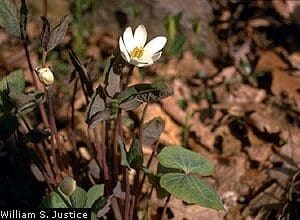
Jeffersonia diphylla, Twinleaf, Wholesale Native Bare Root Perennial
$8.00 Add to cart